Travertine cleaning & sealing
Stone-safe cleaning and the right sealer to protect travertine pool decks, patios and walkways from desert sun, hard water and pool chemicals.
Travertine is one of the most popular pool deck materials in Las Vegas. It stays cooler underfoot than concrete and has a warm, natural look. It's also porous, which means it soaks up pool water, chemicals, hard-water minerals and stains. The right cleaning and sealing keeps it looking good for years.
What's included
- Stone-safe cleaning with controlled pressure and cleaners made for natural stone
- Stain treatment for hard-water scale, rust from sprinklers and efflorescence
- Joint sand replaced where it has washed out
- Sealer in the finish you choose: natural, or color-enhanced to bring out the tones in the stone
Natural or enhanced?
Some people want their travertine to look exactly as it does now, just protected. Others want the colors to show the way they do when the stone is wet. Our Natural Luster finish is a favorite on travertine, and we'll help you choose before anything goes down.
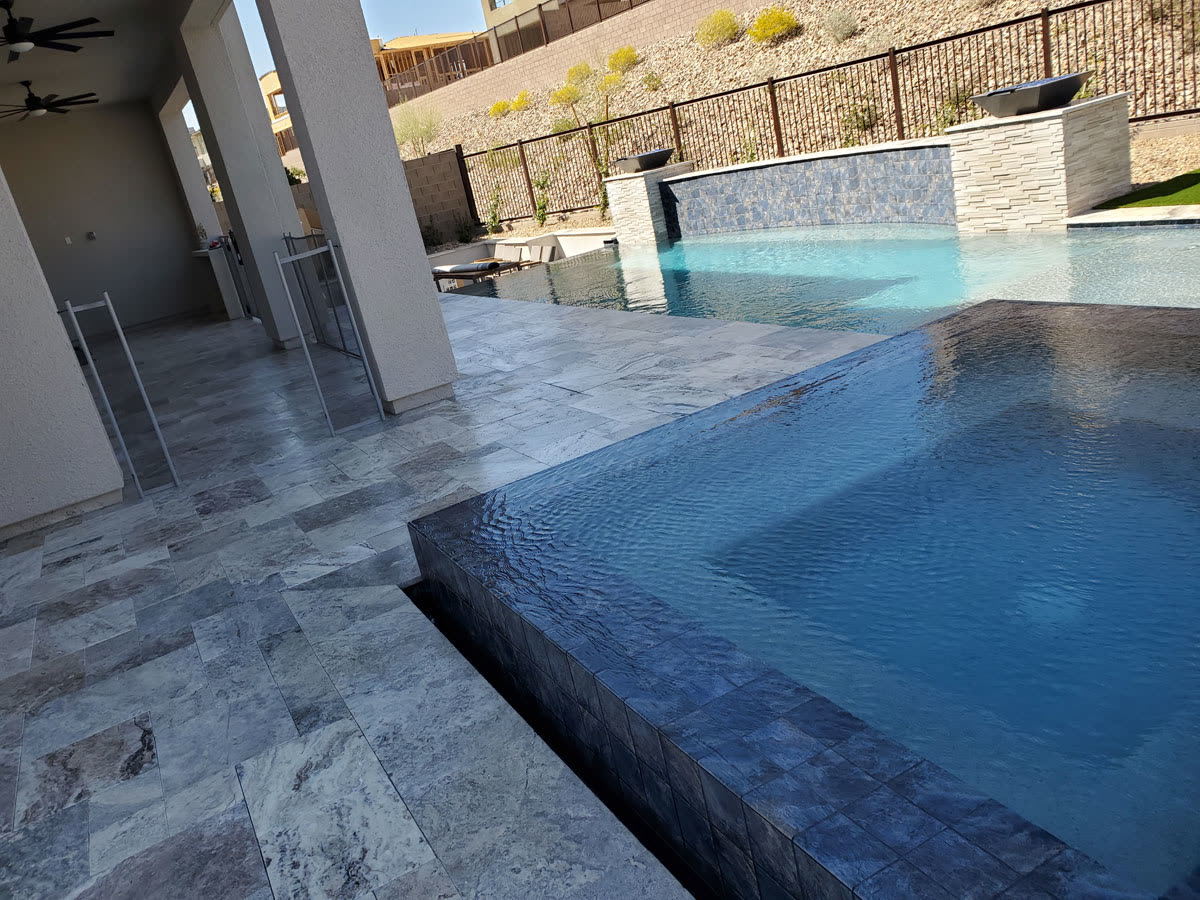
Signs your travertine needs attention
- White crust or haze near the pool edge from hard water and pool chemistry
- Orange rust spots from sprinklers
- Water soaks in instead of beading up
- Dark spots in the holes and joints
- Joints missing sand or sprouting weeds
Travertine and salt water pools
Salt pools are common here. Splash-out soaks into the stone and dries into salt crystals that can wear the surface over time. Sealing reduces how much salt gets in, and a regular fresh-water rinse helps too.
Before sealing day
See the sealing day prep checklist for what to move, pool settings and cure times.
Recent travertine work
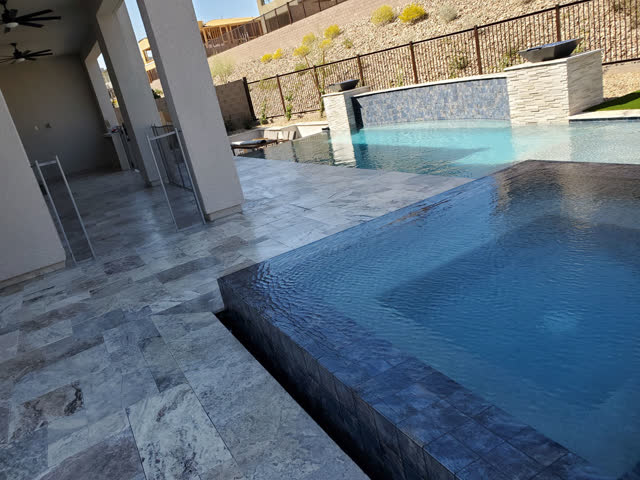
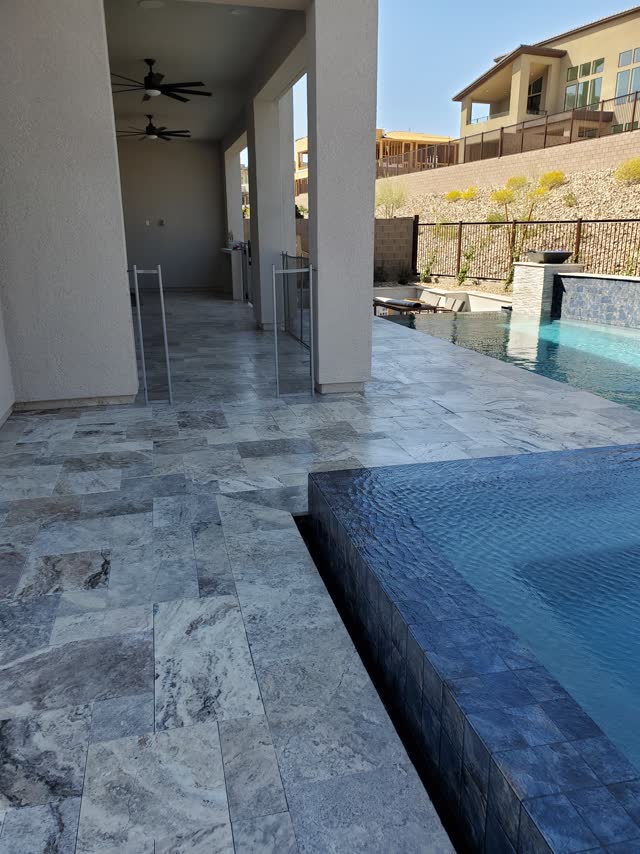
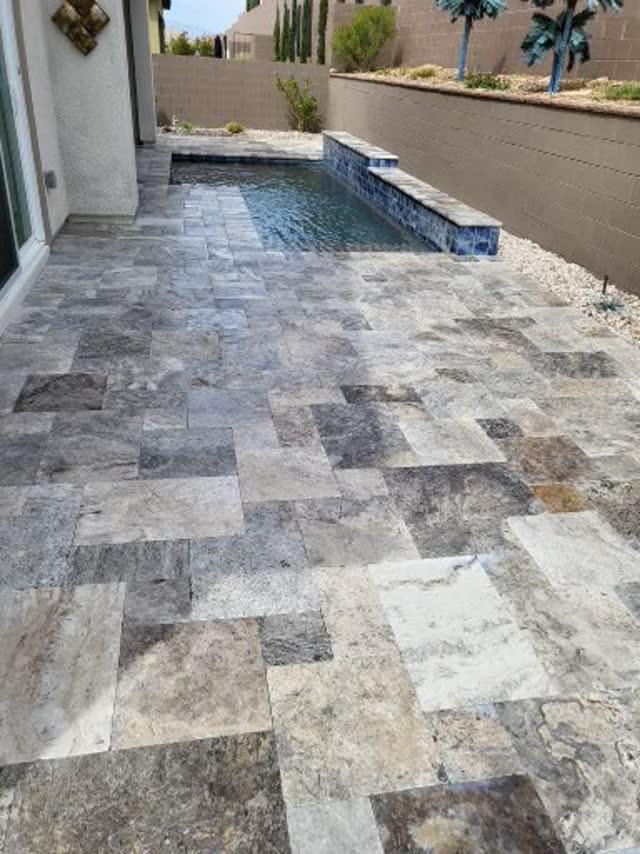
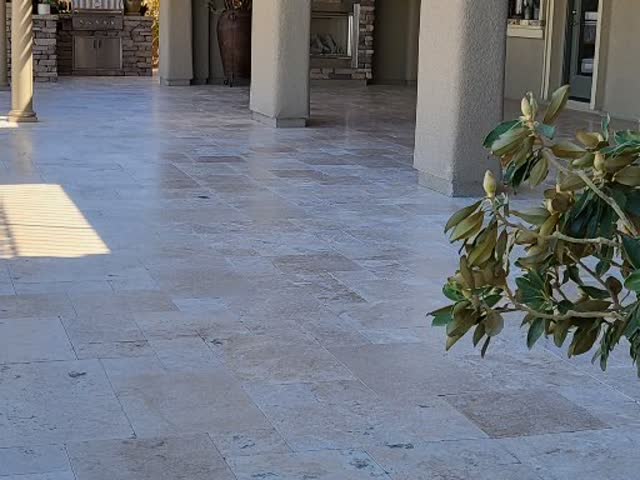
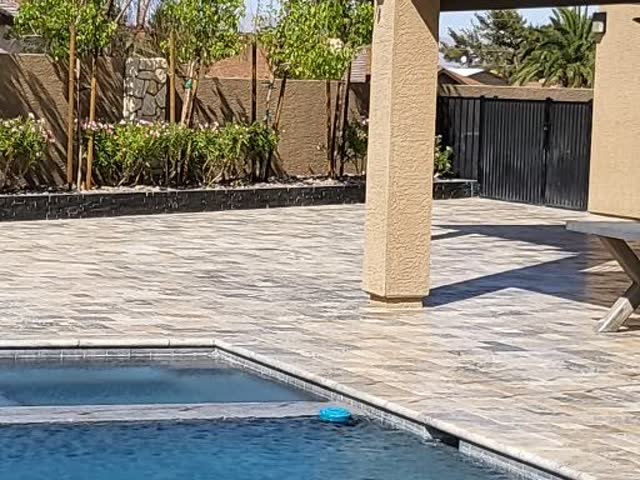
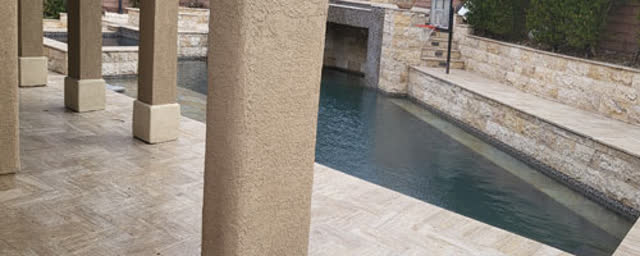
Travertine questions
Should travertine be sealed in Las Vegas?
Yes. Travertine is porous, so it soaks up pool water, chemicals and our very hard water. Sealing reduces absorption, slows staining and mineral buildup, and makes the stone much easier to keep clean.
Will sealing make my travertine slippery?
A natural, low-sheen finish keeps the feel of the stone. Glossier, color-enhancing finishes can feel slicker when wet, so we talk through what fits a pool deck before we seal.
How often should travertine be resealed?
Usually every two to three years in our sun and heat. If water soaks in instead of beading up, it is time.
Do you pressure wash travertine?
Carefully. Travertine is softer than concrete pavers, so we use controlled pressure and stone-safe cleaners. Too much pressure can etch the surface and blow out the joints.
Ready for a free quote?
Most quotes are ready the same day. Call, text, or send a few details.